A bedroom for a cat lover can feel warm and personal without turning into a theme room. The most inviting spaces leave room for the cat and the person who shares them: a comfortable place to read, fabrics that feel good at the end of the day, and a few details that nod to the bond without repeating paw prints on every surface.
Start with the feeling you want from the room. Soft light, natural materials, and a restrained palette can make it feel restful. Then add cat-related pieces in places where they make sense: one small print, a favorite book on the nightstand, or a perch that lets your cat watch the morning. Here are ten ideas to bring those parts together.
1. Choose cat artwork with a quiet point of view
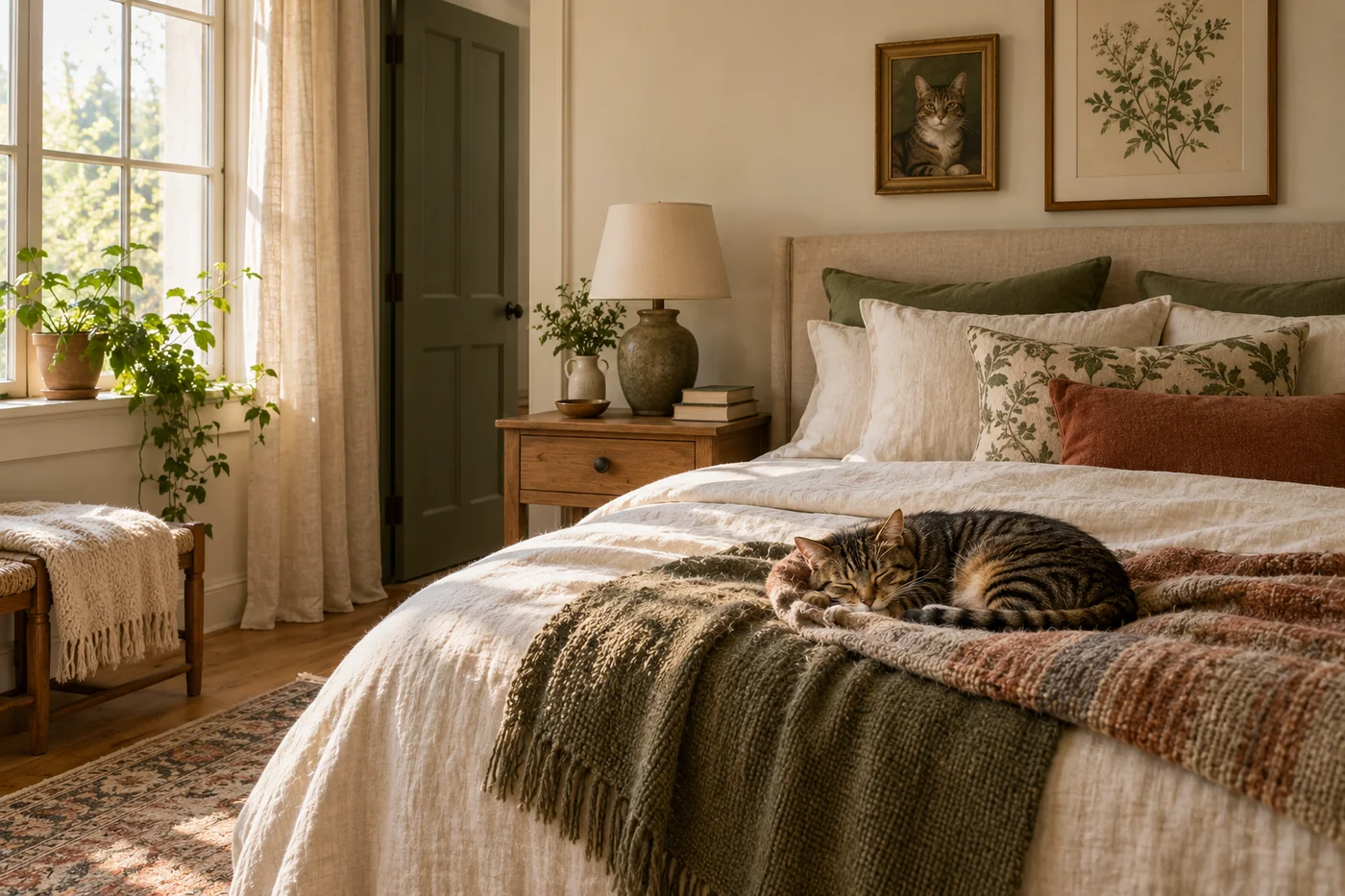
Cat art can be playful, but it does not need to dominate the room. Look for a print with a simple line drawing, a vintage-inspired portrait, or a small detail such as a curled tail in a botanical scene. A muted palette can connect the image to the rest of the bedroom while still making it feel personal.
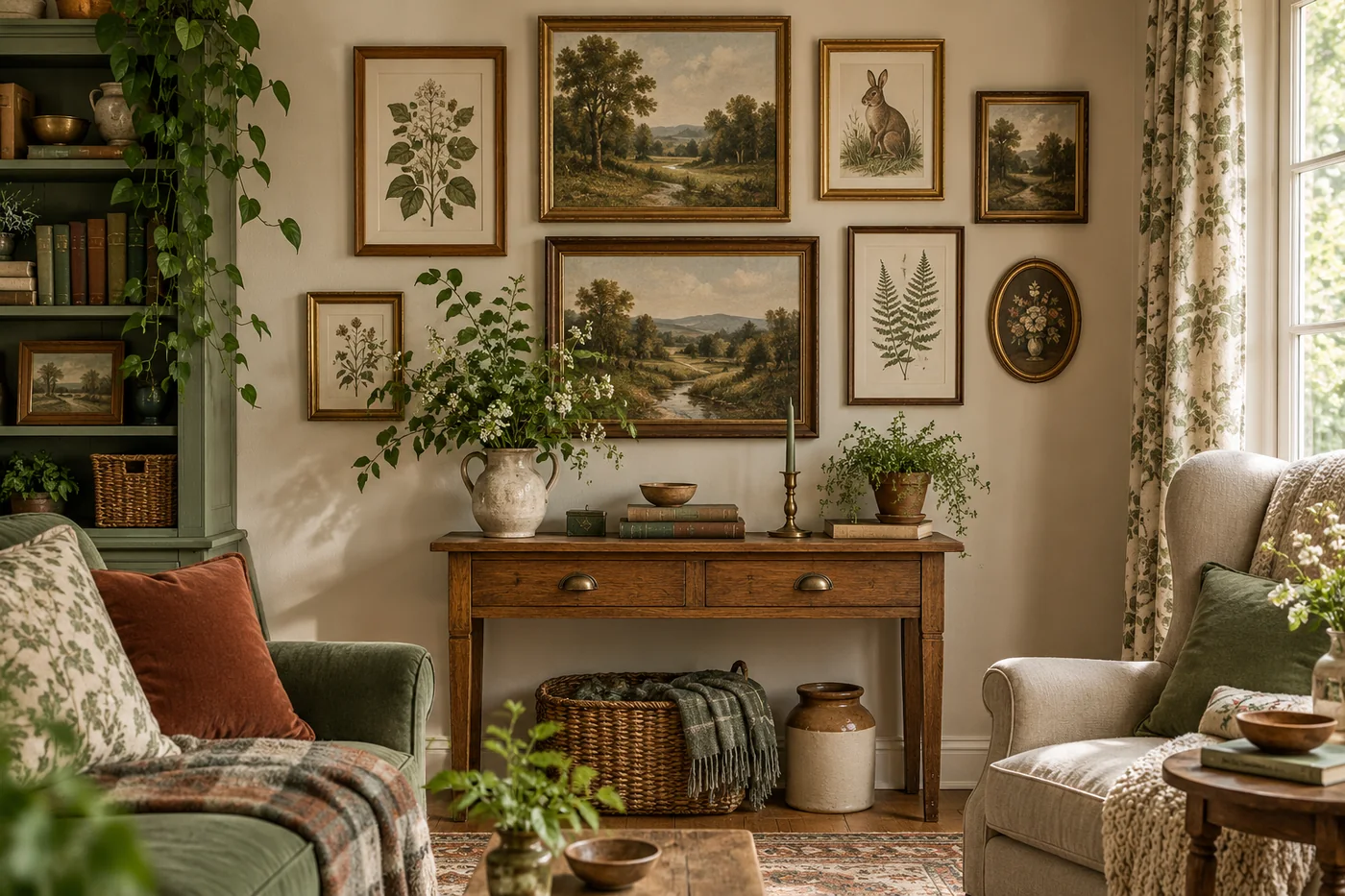
One well-placed artwork above a dresser or beside the bed may be enough. If you prefer a gallery wall, mix the cat image with botanicals, landscapes, bookish details, or photographs. Repeating one frame finish or background color helps the collection feel considered. For more ideas, use the cottagecore gallery wall guide to plan a varied arrangement.
2. Layer textiles for comfort and easy care
Soft bedding is one of the simplest ways to change the mood of a room. Start with sheets and a duvet cover you enjoy touching, then add a blanket at the foot of the bed and one or two cushions. Linen, cotton, and wool blends each have their own feel and care needs; choose what suits your routine as well as your style.
If your cat likes to nap on the bed, washable layers are useful. A throw placed over a favorite sleeping spot can be easier to launder than the full duvet. Choose fabrics you can maintain comfortably, and check care labels before bringing them home. A textured weave or a small botanical pattern adds interest without making the bed look busy.
3. Make a reading corner that invites you to stay
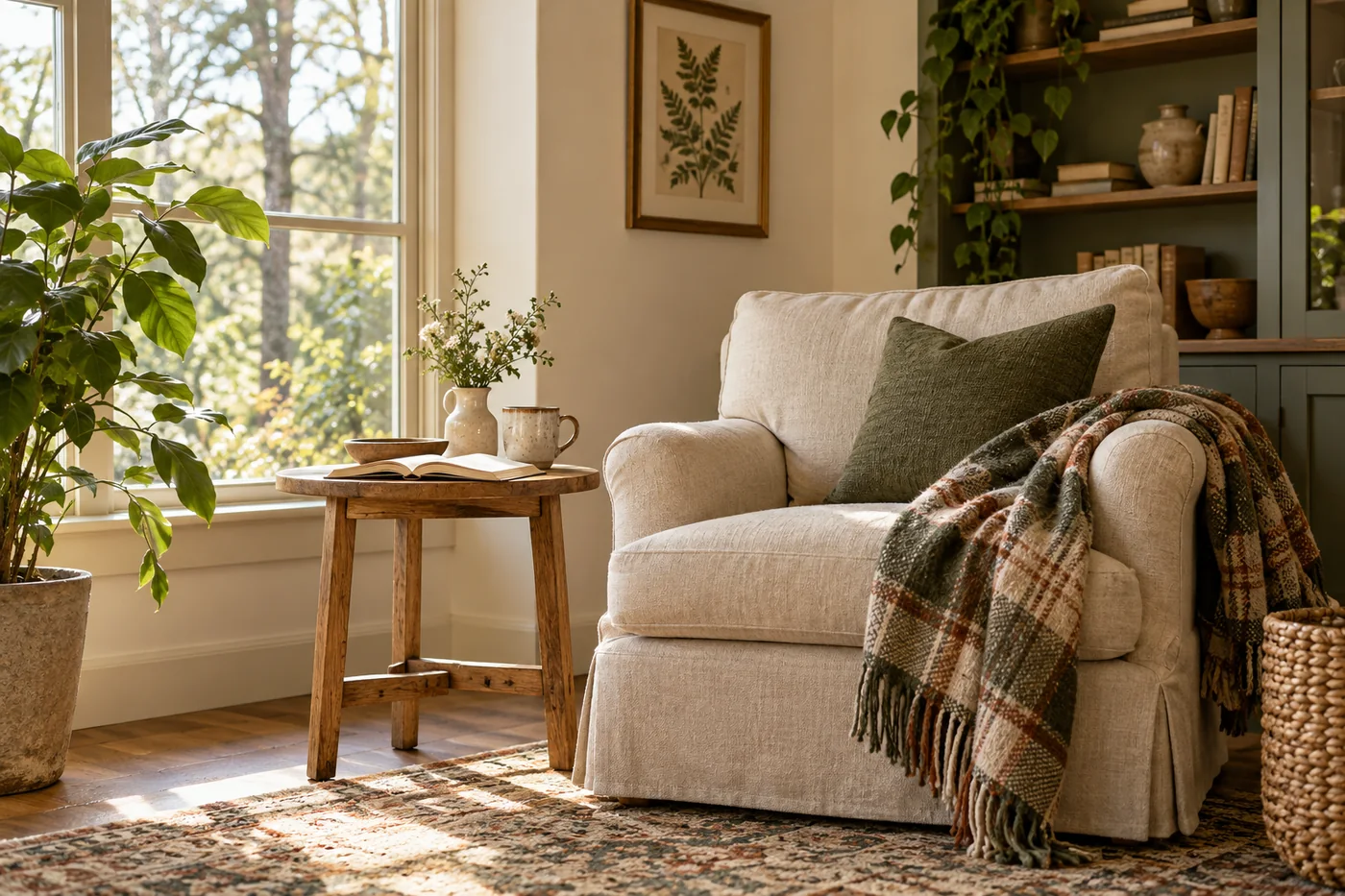
A chair, a small side table, and a light you can reach are enough to make a bedroom corner feel purposeful. Keep a short stack of current books nearby and leave the seat clear when you are done. If your cat joins you, a folded blanket on the chair or a nearby cushion can offer a familiar resting place.
The reading corner does not have to be large. In a compact room, a cushioned bench at the end of the bed or a chair pulled beside a window can provide the same pause. Keep the walking path open and avoid crowding the corner with decorative objects that are easy to knock over.
4. Use warm, layered lighting
Ceiling lights are useful for cleaning and getting dressed, but a bedroom feels more restful when you can use smaller lights in the evening. A bedside lamp, a floor lamp near a chair, or a wall light can create separate pools of light for reading and winding down.
Choose fixtures with stable bases and place cords where they are less likely to catch a curious paw. If your cat chews or bats at cords, route them behind furniture or use a cord cover designed for the purpose. Keep hot bulbs and dangling decorations out of reach, and follow the fixture maker’s instructions for bulb type and clearance.
5. Bring in natural materials
Wood, woven baskets, ceramic, and cotton can add quiet texture to a bedroom. A wooden nightstand or a simple rattan basket can bring warmth without needing extra color. Natural materials also sit comfortably beside botanical artwork and muted textiles, which helps a cat-inspired room feel connected to the rest of the home.
Think about how each material will be used. A woven basket can hold extra blankets; a lidded box can keep small items out of paw’s reach. If a surface is fragile or valuable, place it where the cat is less likely to jump or brush past it. A few durable materials repeated across the room look more intentional than a collection of unrelated accents.
6. Make use of shelves thoughtfully
Shelves can hold books, framed prints, and objects you like seeing every day. Keep the lowest shelf simple if your cat likes to investigate. Use secure fixings, avoid stacking heavy objects near the edge, and leave a clear, sturdy route if you are intentionally making a perch.
If you do not want shelves to become a climbing route, place them away from launch points such as dressers or the top of a wardrobe. For a cat that enjoys height, a stable cat tree or purpose-made shelf system may be a better option than an improvised stack of furniture. The right choice depends on the room and your cat’s habits.
7. Keep the palette calm, then add one personal accent
Begin with two or three room colors: perhaps warm cream, soft green, and natural wood, or deep blue, brown, and linen. Add a single accent through a cushion, a small print, or a colored vase. Cat artwork can use that accent too, tying the subject into the space without making the whole room feel themed.
If the bedroom already has patterned bedding or wallpaper, keep other details quieter. If the room is mostly solid colors, a botanical or vintage-style print can bring in a little movement. A useful rule is to let one thing lead in each area: the bedding, the artwork, or the view from the bed.
8. Add personal details with meaning
Choose a few objects that remind you of a place, a book, or a favorite moment with your pet. That might be a framed photograph, a small keepsake, a favorite novel, or a print that captures the look your cat gives you at breakfast. Personal details are often more charming than decor bought just to fill a surface.
Keep breakable or sentimental pieces in a spot that works with your cat’s movement. A closed shelf, a wall-mounted frame with secure hardware, or a dresser away from a jumping route may let you enjoy the object with less worry. Small adjustments help the room feel shared rather than off-limits.
9. Plan a gallery wall that feels like part of the room
A gallery wall can include a cat portrait, but mix it with shapes and subjects that create a broader story. A botanical study, a small landscape, and a book-related print can all sit beside an animal image. Repeat a couple of frame finishes and keep the gaps comfortable. Test the layout with paper templates before you hang anything.
Think about the view from the bed. Prints placed too high may disappear from that angle, while frames placed within reach of a jumping cat may need sturdier hooks. Use secure fasteners appropriate to the wall and frame weight. If you want to rearrange pieces seasonally, keep the heaviest work low and use consistent frame sizes that are easy to swap.
10. Make a few cat-aware choices for the furniture
Look at the room from your cat’s point of view. Are there stable places to rest? Can your cat reach a window safely? Are there fragile objects on the route between the bed and favorite perch? A scratcher near a tempting corner may protect upholstery better than asking a cat to ignore it.
Choose furniture and accessories for your own needs too. A closed bedside table can hide small objects; a washable cover can protect an upholstered chair; a broad windowsill may need a stable cushion that does not slide. Secure tall furniture to the wall where appropriate and keep blind cords, plants, and small swallowable items out of reach. If you are unsure about the safety of a plant or product, check with a veterinarian or a reliable animal-care source before bringing it into the room.
A bedroom that belongs to both of you
The best cat-friendly bedroom is not a display of cat-themed objects. It is a comfortable room where the cat’s habits have been considered and the person’s taste still leads. Start with good light, comfortable textiles, and a small number of meaningful details. Add a resting place that works for your cat, make fragile objects safer, and let the room grow gradually.
You might begin with a favorite print or a soft blanket and notice what the room needs next. When each choice has a place and a purpose, the result feels more like a home you share than a room arranged around a single motif.