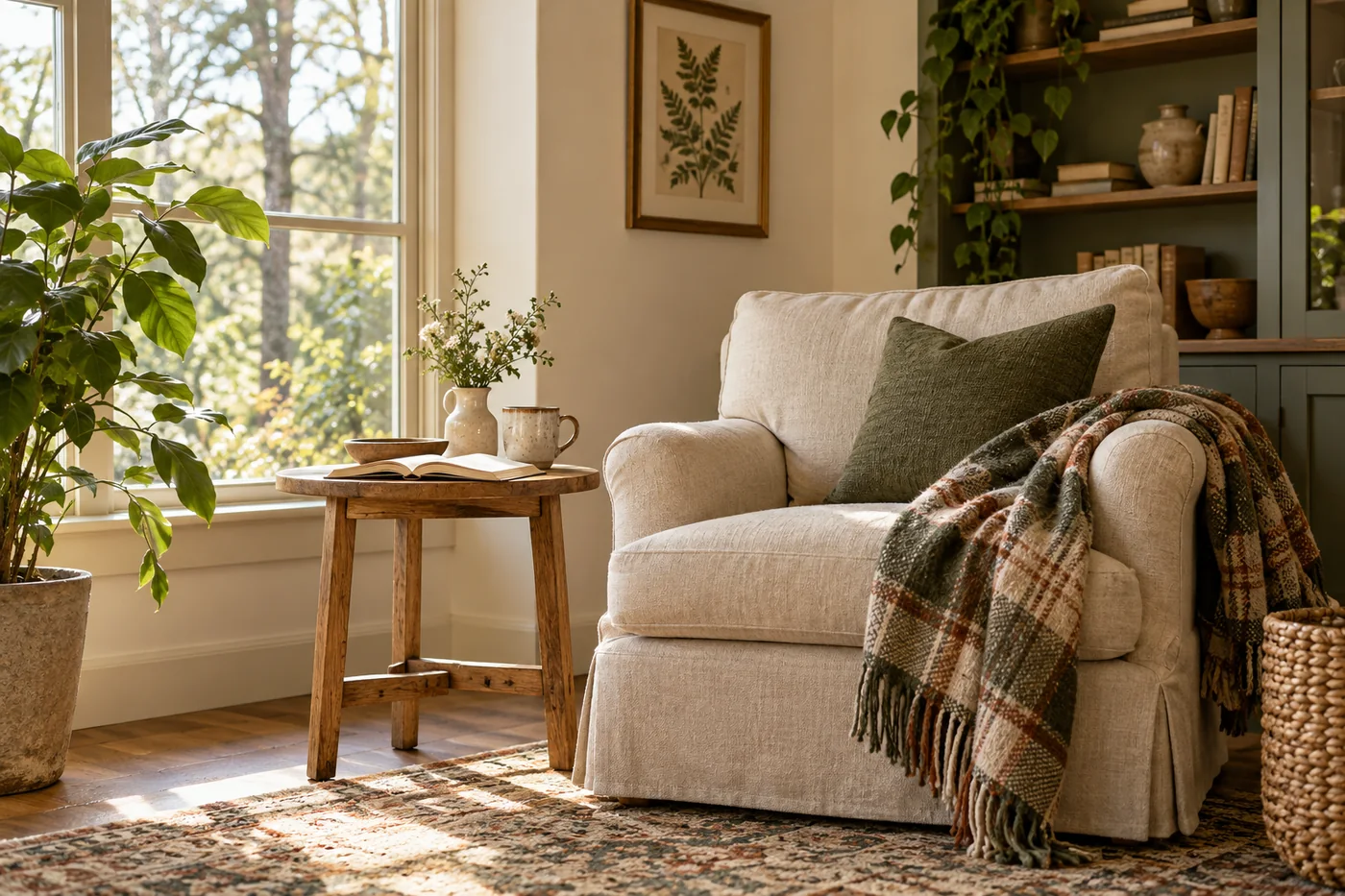
A reading nook does not need a spare room, a built-in window seat, or a long shopping list. A chair in an underused corner can become a place you look forward to if it is comfortable, well lit, and easy to use. In a small home, the trick is to make the nook fit the way the room already works.
Start with three essentials: somewhere comfortable to sit, a light you can read by, and a place to set down the book you are reading. Then add only the details that make the spot feel like yours. Here is a practical way to plan a reading corner in a bedroom, apartment, or shared living space.
Find a spot that already has room to breathe
Look for space that is going unused rather than trying to fit a full reading set into the busiest part of the room. A corner beside a window, the end of a bedroom, an alcove near a bookcase, or one side of a living room can all work. The best location is one where you can settle in without blocking a doorway, wardrobe, heater, or the usual path through the room.
Before buying a chair, measure the clear floor area. Mark the footprint with painter’s tape, including the space the chair needs when you sit down and stand up. Add the side table or lamp base to the outline. Walk past it and open nearby doors. If the taped layout feels awkward, try a narrower wall or another corner; a compact nook should make the room easier to use, not harder.
Think about how you will use the spot, too. A sunny window may be lovely for daytime reading, but a corner near an outlet may be more useful if you read in the evening. If the only available place is a bedroom, a spot beside the bed or dresser may be enough. You do not need a separate zone with a boundary around it.
Choose seating for the footprint and your reading habits
The seat is the main decision, so test its comfort before choosing its style. Sit long enough to notice whether the seat depth supports your legs, whether the back feels comfortable, and whether you want arms to rest a book or your elbows. If you like to tuck your feet up, bring that into the decision; a compact chair that looks right but feels cramped will not invite you to stay.
A small upholstered chair is one option, but it is not the only one. A built-in bench, a bedroom chair you already own, or a firm floor cushion can work when floor space is tight. A storage ottoman can double as a seat if it is stable and comfortable at the height you need. Measure the actual piece, including arms and legs, rather than relying on how it looks in a product photo.
If you want to put your feet up, test the arrangement with a footstool or a small ottoman before adding one permanently. It should be easy to move out of the way when the nook is not in use. In a shared room, a chair that can turn toward the rest of the space may be more useful than a seat fixed into a corner.
Put the reading light where the page will be
Natural light makes a window-side nook pleasant during the day, but it changes with the weather and time. Plan a dedicated lamp if you read after dusk. An adjustable floor lamp can sit beside a chair; a table lamp works when there is a stable surface nearby; a wall light can free up a tiny tabletop if the room and rental rules allow it.
When you test a lamp, sit in your usual position and open a book. Aim the light at the page from the side or over your shoulder so the bulb is not shining into your eyes and your hands are not casting a heavy shadow across the text. If the lamp is adjustable, check that it stays in place when moved. Keep cords tucked away from walking paths, and follow the lamp maker’s instructions for bulbs and placement.
The ceiling light can still serve the room, but it rarely makes a corner feel inviting on its own. A small pool of light helps the nook feel distinct without adding a screen or divider that would make a compact room feel smaller.
Keep books and a drink within easy reach
Book storage should match what you are reading now, not an imaginary library. A sturdy basket beside the chair can hold a few current books and a blanket. A slim side table can take a book, reading glasses, and a mug. If the chair is close to a bookcase, leave the most-used shelf easy to reach rather than adding another unit.
In a very small room, use vertical space carefully. One secure wall shelf can hold a short stack, while a narrow ledge can display a few covers. Attach shelves with fixings suited to the wall and the weight they will carry; keep heavy books low and avoid balancing objects near an edge. If you rent, check your agreement and choose a storage option that works with the rules of the home.
Try the nook for a few days before buying more storage. You may find a basket is enough, or notice that you need a place for a lamp and cup more than another bookcase. Keeping the surface clear makes the corner easier to reset when you are done.
Add softness and one visual cue
Once the basics work, add a throw, a cushion, or a small rug if it fits the floor plan. These pieces make a chair feel more welcoming and can bring together colors already in the room. Choose washable or easy-care fabrics if the nook is used every day, and leave enough bare seat space to sit comfortably.
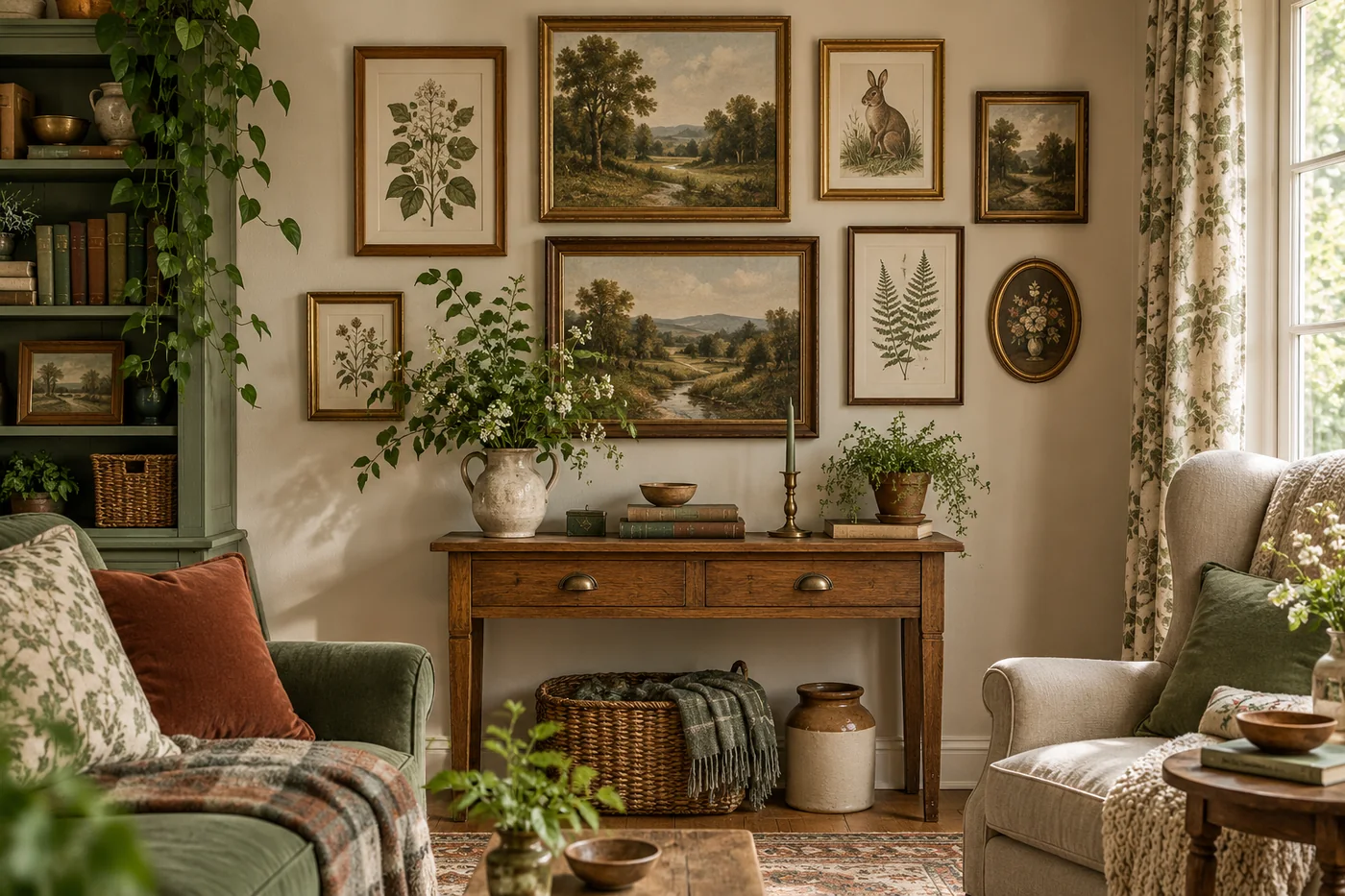
One framed print can help distinguish the reading corner without using floor area. A botanical image or quiet landscape can echo the view outside, while a bookish print can make the purpose of the space feel personal. If you would like several pieces, the cottagecore gallery wall guide explains how to make a small arrangement feel connected. For a single printable, the printable wall art size guide can help you compare the artwork’s proportions with the frame you have.
A small botanical print can also add color without making the corner busy. Cedar Clover Market’s Ginkgo Branch Botanical Print is one option in soft sage and parchment tones; the product card below links to the listing. Choose a piece because it suits the room, and let the wall stay simple if the corner already has patterned textiles or a strong view.
Adapt the idea to your room
- At a window: place the seat so you can enjoy the light without facing direct glare on the page. A small table on the side with more clearance is often easier than squeezing one between the chair and the window.
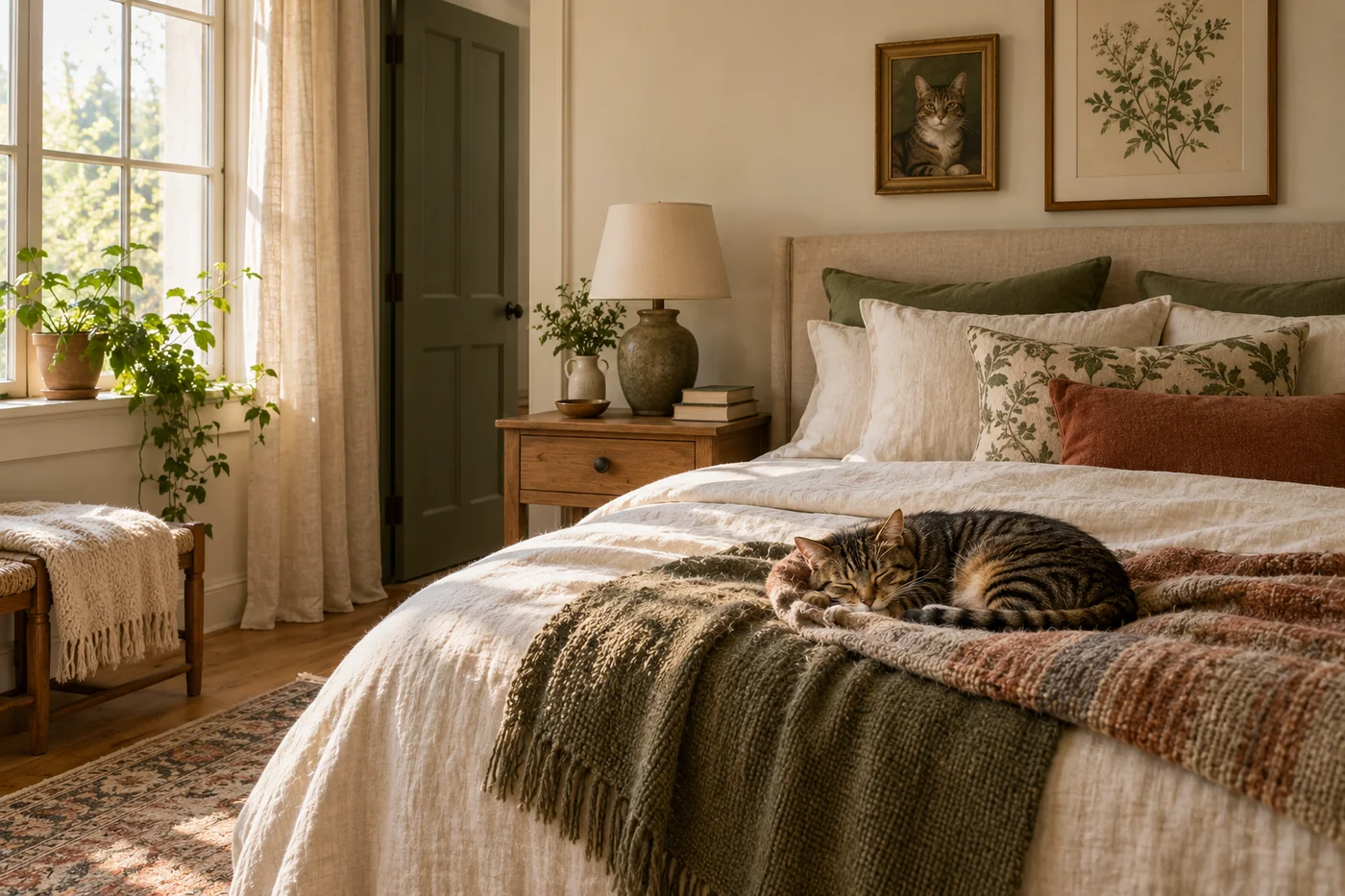
- In a bedroom: use a chair near a dresser or at the end of the bed, then keep the route to the wardrobe clear. If you share the room with a cat, these cat-friendly bedroom ideas include ways to think about washable layers and shelves.
- In a living room: choose a seat that still works when you are not reading. Angle it toward the room, and use a lamp and basket to make the corner feel settled without putting up a divider.
- In a rental: start with movable pieces: a chair, a plug-in lamp, a basket, and artwork that can lean on a stable shelf. You can make the spot feel finished without changing the walls.
Small-space mistakes that make a nook harder to use
The most common mistake is choosing decor before checking the footprint. A chair may fit in a photo but crowd the route through your room. Measure first and include the lamp, table, and space to get in and out of the seat.
Another is relying only on daylight. If you tend to read in the evening, a place that is bright at noon may be uncomfortable after dinner. Test the light at the time you expect to use the nook.
It is also easy to add too much storage. A tall bookcase, several baskets, and stacks on the floor can turn a relaxing corner into a cluttered one. Start with a small home for the current book and add storage only when you know what is missing.
Finally, avoid decorating every surface. One lamp, a small table, and one or two soft details are often enough. The goal is a comfortable place to read, not another area that needs constant tidying.
Set it up in a simple order
Begin by choosing a spot and marking the furniture footprint on the floor. Test the route through the room, then place the seat and sit in it with a book. Add the reading light and adjust it at night. Only after those pieces feel right should you choose a table or basket for the things you reach for most.
Finish with one personal detail: a blanket, a print, or a favorite cushion. Try the nook for a week before adding anything else. If you can settle into the seat, see the page comfortably, and put your book down without getting up, the small corner is doing its job.
Thoughtful finds from the shop
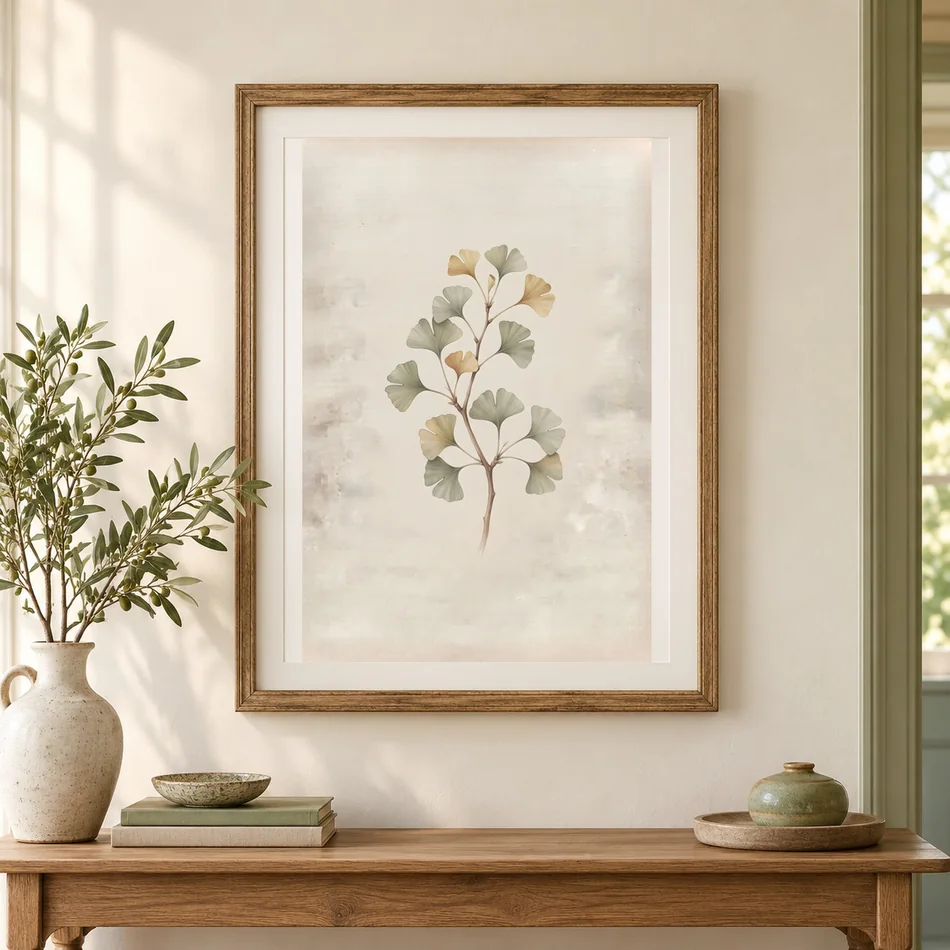
Printable wall art
Ginkgo Branch Botanical Print
A single vintage-inspired ginkgo print in soft sage and warm parchment tones.